The real seed of psychoanalysis: medical misdiagnosis

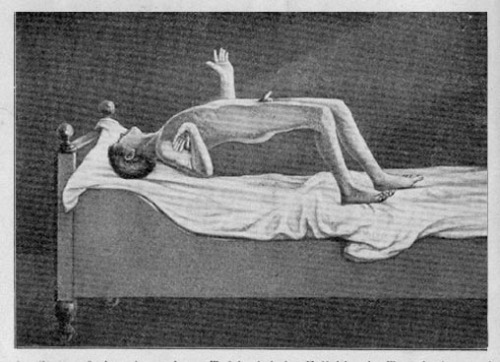
Photo of male arc-de-cercle hysteria
In October of 1885, a man was hit by a speeding carriage, received a massive concussion and spinal damage, and was brought to La Salpêtrière hospital and treated by Charcot. The man’s head had been smashed, but knowledge of the brain was so low that the notion of internal injury had not even dawn yet as an item of consideration. Charcot decided that the man was a victim of traumatic hysteria—that his symptoms were caused by the psychological trauma of the accident. His amnesia was not due to fear, it was due to physical damage to the brain.
From this misdiagnosis Freud would invent his theory of the unconscious symptom formation by innately repressive unconscious mechanism.
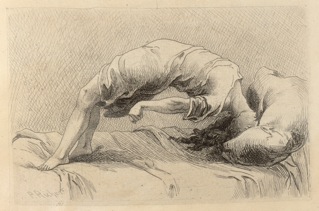
Nearly every symptom of neurological damage was interpreted by Charcot as hysteria. For example, we now know that compulsively arching themselves backwards (then know as the arc-de-cercle position) is an effect of frontal lobe epilepsy. For Charcot, it was hysteria. For Freud, it was conversion disorder—the conversion of intrapsychic distress into physical symptoms. In this case, from specifically sexual trauma (the arc-de-cercle is sometimes combined with rhythmic pelvic thrusting).