THC
THC was (culturally) bad
Once upon a time, THC caused children to stop growing, grow breasts, and lose brain cells. It the 70s and 80s, it was certain that THC was one of the pans upon which brains were fried and possibly eaten. Today, the FDA has taken out a patent for using THC as a neuroprotective. My, how things change.
THC has always been (medically) good
THC is no longer “bad.” How do we know? Because of research or cultural observation? Nope, the beneficial effects have been known for a long time. Everyone knows that the Beatles’ songs were inspired by THC. Bob Dylan, winner of the 2016 Nobel Prize in Literature, admitted that everything he ever wrote was written under the influence of THC and Adderall. A former UT professor wrote all of her books and articles on THC, and even advised her students that they wouldn’t be able to grasp her arguments without it.
Cannabinoids from plants work because our bodies produce the same molecules (or analogs thereof) all by itself. The endocannabinoid system is involved in regulating a variety of physiological and cognitive processes including fertility, pregnancy, during pre- and postnatal development, appetite, pain-sensation, mood, and memory, and in mediating the pharmacological effects of cannabis.
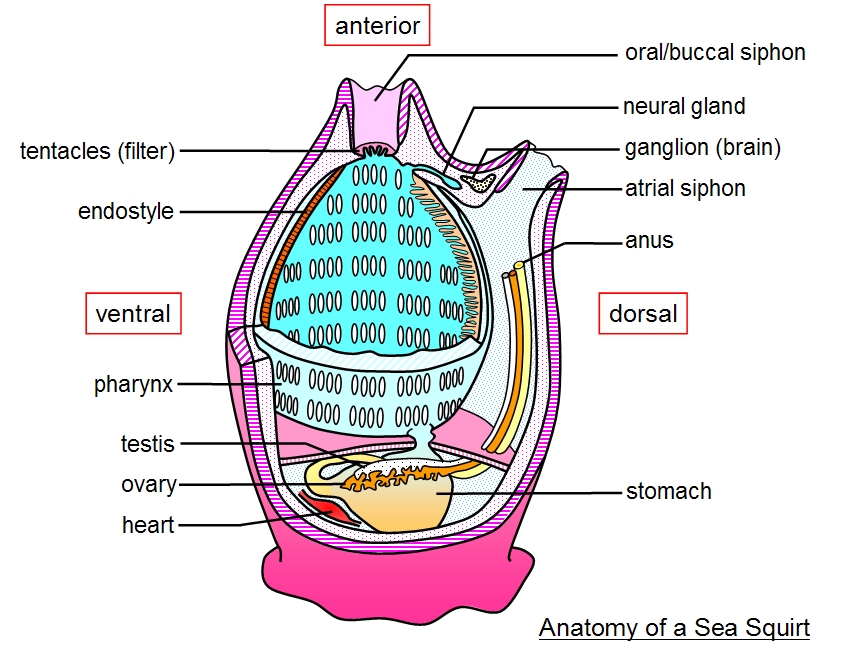
An early stoner.
Cannabinoid receptor proteins are expressed throughout the mammalian central nervous system (including the brain) and peripheral nervous system. It is an old communication network that traces back through our earliest animal ancestors all the way to the sea squirt. Cannabinoid receptors were present earlier on in evolution than anyone previously believed—in the Cambrian Stage 3 (550 millions years ago).
THC also has anti-cancer qualities. These have been known the the US government for over 40 years. In 1974, Albert Munson (Medical College of Virginia) led a study showing that THC slowed the growth of three kinds of cancer—lung, breast and virus induced leukemia. Upon discovering these effects, the government shut down the study and all further cannabis-tumor research was abandoned.
But we now know that these effects are real. THC and other cannabinoid receptor-ligands induce cancer cell death and inhibit tumor angiogenesis while leaving healthy cells untouched. Dozens of major studies have been published in the last few years that indicate that the chemicals in cannabis, in the lab and in animals, have a significant effect on fighting almost all major cancers including brain, breast, prostate, lung, thyroid, colon, skin, pituitary, melanoma and leukemia cancers. Cannabinoids actually have four cancer eliminating functions. They are …
- Antiproliferative. Cannabinoids have been shown to prevent cancer cells from reproducing.
- Antiangiogenic. It prevents the formation of new blood vessels necessary for a tumor to grow. It has been shown that CBD inhibits angiogenesis by multiple mechanisms.
- Antimetastatic. It prevents cancer cells from spreading to other organs. For example, it has been shown that THC inhibits growth and metastasis of lung cancer. (In fact, people who smoke cannabis—and smoke of any kind of carcinogenic—have a lower incidence of lung cancer than people who smoke nothing at all.)
- Apoptotic. It induces apoptosis (programmed cell death). Uncontrolled cell proliferation is one of the defining features of cancer cells. It has been shown that THC induces apoptosis in several human cancer cell lines while sparing non-transformed cell lines.
Tangent: A funny story about biological economy
Consider the diet pill Rimonabant. Rimonabant is an anorectic weight loss drug approved in 2006. How does it work? By being an inverse agonist for the cannabinoid receptor CB1.
As everyone knows, THC makes you hungry because it activates the CB1 receptor. So it stands to reason that blocking CB1 ought to reduce appetite. When they gave Rimonabant to humans, it worked! People had lower appetite and they ate less.
Unfortunately, they also committed suicide. Other very common (> 10%) side effects included nausea and upper respiratory tract infections.
Remember kids: biological is economical. There are only so many stable and easily manufactured bioactive molecular shapes. A single molecule (or receptor shape) will produce different effects (and serve different functions) in different neurological pathways. The molecule that regulates hunger also regulates depression, anxiety, insomnia, and aggressive impulses. Now we know.
Tangent: Anti-THC “education” was paid for by cocaine dealers
So the benefits and harmlessness of THC have been an open secrete among the educated for decades. It was only the innocents, the children, who were brainwashed with barely-disguised propaganda, that believed otherwise.
When I was a child, I caught a fleeting glimpse of and anti-cannabis coloring book that Howard Drive Elementary gave my friend Dodger’s little brother. It depicted cannabis as one of the weapons used, by an evil clown, to liquify the brains of children and convert them into male prostitutes.
Where did these hilarious Orwellian parodies come from? They were distributed by the Miami-Dade County Public School system. But they were paid for none other than Coca-Cola, a company that made lots of money selling drinkable cocaine (an addictive drug that is even more illegal than pot—especially if you’re black and dilute it with baking soda).
THC (and other cannabinoids): summary of effects
Cannabinoids regulate four things:
- Hunger
- Libido
- Happiness
- Cancer
Why THC is now (culturally) good
Back to my questions of how it is that THC is “good” these days. It is not because THC is healthy, but only because THC has been commodified, and thus reborn as friendly, safe, and normal. As a general rule, anything that appears in the grocery store—boxed in primary colors, a clean font, and with a nutrition label—it is objectively and universally perceived as a non-threat. What really makes something normal is being standardized in perfectly reproduced packaging. Just look at these random Google results:
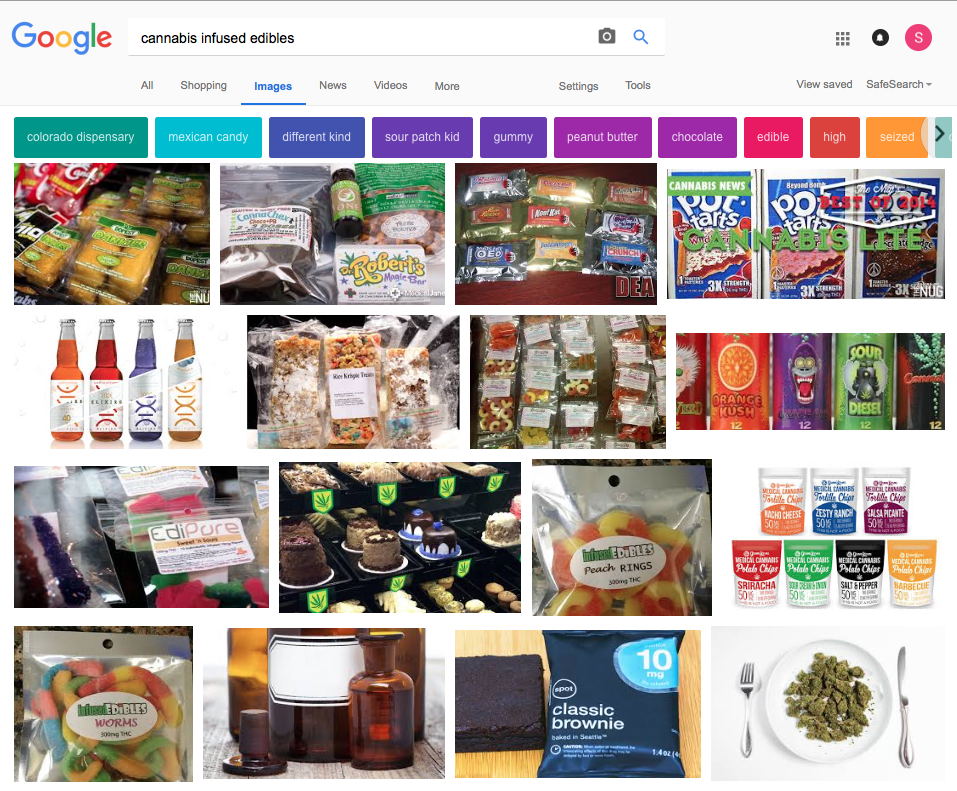
“Hello! We are your cannabis friends! Look for us on brightly lit store shelves next to Tony the Tiger and other cherished family friends.” Not an evil clown in sight. (But if there were, it would still look good because it would appear as a logo rather than an MS-13 neck tattoo.)